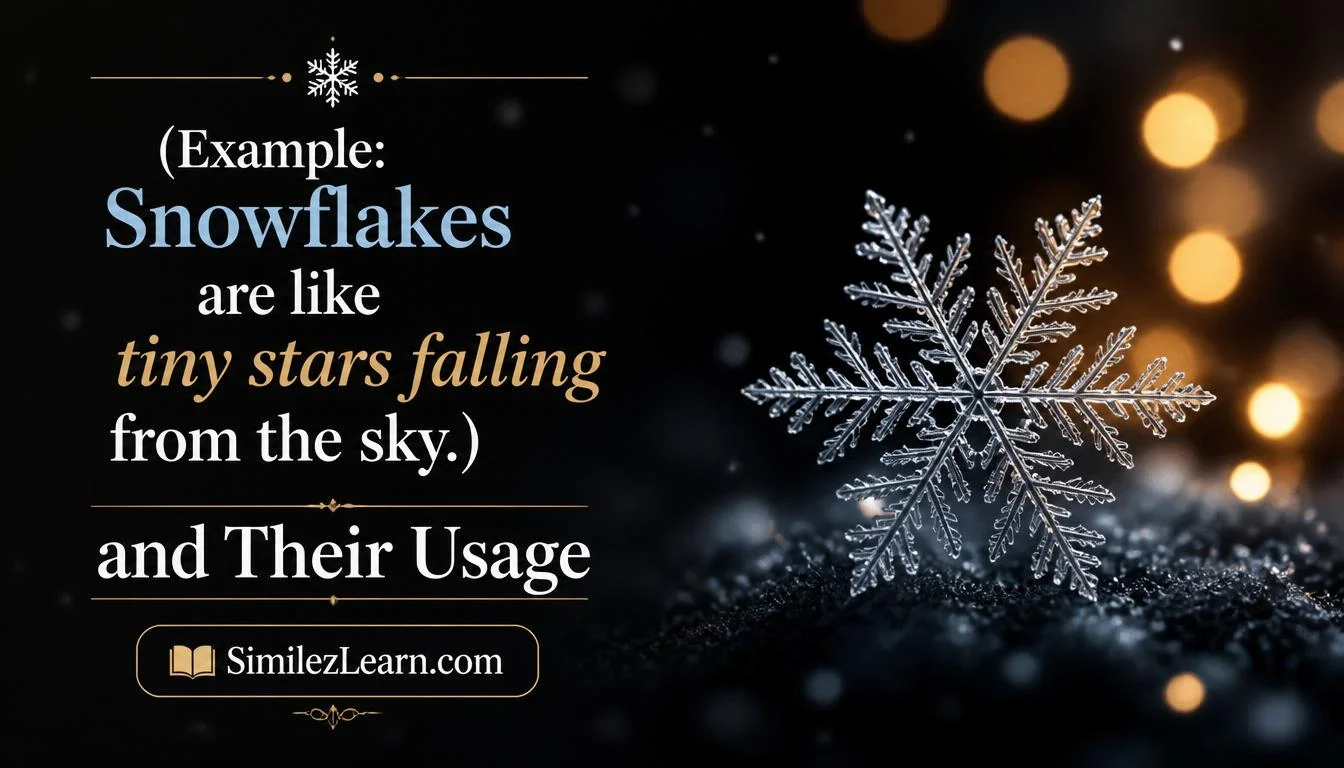
A simile for snowflakes is a creative way to describe the beauty, shape, movement, and uniqueness of snow by comparing it with something familiar. Snowflakes are naturally delicate and magical, so writers often use similes to make winter scenes more colorful and memorable.
Instead of simply saying “the snowflakes were beautiful,” a writer can say, “The snowflakes were as soft as feathers.” This comparison helps readers imagine the gentle texture and peaceful feeling of falling snow.
Students learning figurative language, writers creating winter stories, and people writing captions often use similes for snowflakes to add creativity. Updated for 2026, this guide explains how to understand, create, and use snowflake similes in essays, poems, stories, and daily conversations.
In everyday conversations, people often use simile for snowflakes to describe winter weather, holiday moments, and natural beauty. From real-life writing experience, comparisons make ordinary descriptions more emotional and easier for readers to visualize.
What Is a Simile for Snowflakes?
A simile for snowflakes is a comparison that uses the words “like” or “as” to describe snowflakes by connecting them with another object or idea.
Snowflakes can be compared to things that share similar qualities, such as:
- Softness
- Beauty
- Lightness
- Shape
- Movement
- Purity
Examples:
- The snowflakes were as white as pearls.
- The snow fell like a blanket of diamonds.
- The flakes floated as gently as feathers.
These comparisons help readers create a clear picture of winter scenes.
How a Simile for Snowflakes Works
A simile works by connecting two different things that have a similar quality. When describing snowflakes, writers usually compare them with objects that represent beauty, softness, or movement.
The common structure is:
Subject + is/was + like/as + comparison
Examples:
- The snowflakes were like tiny stars.
- The snow drifted as softly as silk.
- The flakes sparkled like crystals.
A strong snowflake simile does not only describe appearance; it also creates a feeling of calmness, wonder, and imagination.
Why Use Similes for Snowflakes?
Using a simile for snowflakes makes writing more creative and expressive.
Benefits include:
- Making winter descriptions more interesting
- Helping readers imagine scenes clearly
- Adding emotion to poems and stories
- Improving vocabulary and creative writing skills
- Making captions and social media posts more attractive
Writers often use snowflake comparisons when they want readers to feel the beauty and peacefulness of winter.
Examples of Simile for Snowflakes in Everyday Life
Snowflake similes are commonly used in:
- School essays
- Winter poems
- Holiday cards
- Social media captions
- Stories
- Nature descriptions
- Creative writing projects
Below are creative examples with meanings and explanations.
Examples of Simile for Snowflakes
1. Snowflakes Like Tiny Stars
Meaning: Snowflakes can look bright and magical like stars.
Example: The snowflakes fell from the sky like tiny stars, making the night look beautiful.
2. Snowflakes as Soft as Feathers
Meaning: Snowflakes feel light and gentle.
Example: The snowflakes landed on my hand as soft as feathers.
3. Snowflakes Like White Diamonds
Meaning: Snowflakes can sparkle and look precious.
Example: The snow-covered field shined like white diamonds under the sunlight.
4. Snowflakes as Light as Cotton
Meaning: Snowflakes are delicate and float gently.
Example: The snowflakes moved through the air as light as cotton.
5. Snowflakes Like Falling Pearls
Meaning: Snowflakes look beautiful and valuable.
Example: The snowflakes dropped from the sky like falling pearls during the winter evening.
6. Snowflakes as Pure as Crystal
Meaning: Snowflakes appear clean and clear.
Example: The fresh snow looked as pure as crystal on the mountain.
7. Snowflakes Like Dancing Butterflies
Meaning: Snowflakes move gracefully in the air.
Example: The snowflakes floated like dancing butterflies in the cold breeze.
8. Snowflakes as White as Clouds
Meaning: Snowflakes have a bright white appearance.
Example: The garden became covered with flakes as white as clouds.
9. Snowflakes Like Tiny Glass Pieces
Meaning: Snowflakes can appear delicate and sparkling.
Example: The snowflakes glittered like tiny glass pieces in the sunlight.
10. Snowflakes as Gentle as a Whisper
Meaning: Snow falls quietly and softly.
Example: The snowflakes arrived as gentle as a whisper during the peaceful night.
11. Snowflakes Like Silver Stars
Meaning: Snowflakes can shine beautifully.
Example: The snowflakes sparkled like silver stars across the dark sky.
12. Snowflakes as Soft as Silk
Meaning: Snowflakes have a smooth and delicate quality.
Example: The snow felt as soft as silk when it touched the ground.
13. Snowflakes Like White Butterflies
Meaning: Snowflakes move gracefully while falling.
Example: The flakes flew through the air like white butterflies.
14. Snowflakes as Tiny Pieces of Magic
Meaning: Snowflakes create a wonderful and special feeling.
Example: The snowfall looked as magical as tiny pieces of magic covering the town.
15. Snowflakes Like Floating Lace
Meaning: Snowflakes can have beautiful patterns.
Example: The snowflakes covered the window like floating lace.
16. Snowflakes as Cold as Ice Crystals
Meaning: Snowflakes have a frozen and icy quality.
Example: The snowflakes felt as cold as ice crystals on my gloves.
17. Snowflakes Like Little Stars Falling
Meaning: Snowflakes can create a magical sky-like scene.
Example: The winter sky looked amazing with snowflakes falling like little stars.
18. Snowflakes as Delicate as Glass
Meaning: Snowflakes are fragile and beautiful.
Example: Each snowflake was as delicate as glass, disappearing quickly in my hand.
19. Snowflakes Like White Confetti
Meaning: Snowflakes can fill the air like celebration pieces.
Example: The snow fell like white confetti during the holiday festival.
20. Snowflakes as Calm as a Quiet Song
Meaning: Snow creates a peaceful atmosphere.
Example: The falling snow was as calm as a quiet song on the winter morning.
21. Snowflakes Like Tiny Butterflies
Meaning: Snowflakes can move gently and gracefully through the air.
Example: The snowflakes danced like tiny butterflies before landing on the ground.
22. Snowflakes As Bright As Pearls
Meaning: Snowflakes can shine with a beautiful white glow.
Example: The fresh snow looked as bright as pearls under the morning sunlight.
23. Snowflakes Like Floating Crystals
Meaning: Snowflakes have delicate and sparkling patterns.
Example: The snowflakes drifted like floating crystals across the winter sky.
24. Snowflakes As Quiet As a Secret
Meaning: Snow often falls silently and peacefully.
Example: The snowflakes arrived as quiet as a secret during the late evening.
25. Snowflakes Like Tiny White Flowers
Meaning: Snowflakes can have beautiful shapes similar to flowers.
Example: The snow covered the garden like tiny white flowers scattered everywhere.
26. Snowflakes As Gentle As a Baby’s Touch
Meaning: Snowflakes can feel soft and delicate.
Example: The snow landed on my face as gentle as a baby’s touch.
27. Snowflakes Like Shining Diamonds
Meaning: Snowflakes can sparkle in the sunlight.
Example: The snowy field glittered like shining diamonds after sunrise.
28. Snowflakes As Pure As Fresh Water
Meaning: Snowflakes represent cleanliness and freshness.
Example: The new snowfall looked as pure as fresh water on the mountain.
29. Snowflakes Like White Feathers Falling
Meaning: Snowflakes can appear light and floating.
Example: The snow came down like white feathers falling from the sky.
30. Snowflakes As Beautiful As Artwork
Meaning: Snowflakes can look unique and artistic.
Example: Every snowflake appeared as beautiful as artwork on the frozen window.
31. Snowflakes Like Tiny Lanterns
Meaning: Snowflakes can sparkle and create a magical feeling.
Example: The snowflakes glowed like tiny lanterns under the streetlights.
32. Snowflakes As Soft As a Blanket
Meaning: Snow can cover surfaces smoothly and gently.
Example: The snow covered the field as soft as a blanket.
33. Snowflakes Like Frozen Butterflies
Meaning: Snowflakes move gracefully but have a cold nature.
Example: The flakes floated like frozen butterflies in the winter wind.
34. Snowflakes As White As Paper
Meaning: Snowflakes have a bright white color.
Example: The hills became as white as paper after heavy snowfall.
35. Snowflakes Like Tiny Pieces of Glass
Meaning: Snowflakes can look clear and sparkling.
Example: The snow sparkled like tiny pieces of glass in the sunlight.
36. Snowflakes As Gentle As Falling Leaves
Meaning: Snowflakes move slowly and softly.
Example: The snowflakes descended as gentle as falling leaves from the sky.
37. Snowflakes Like a Silver Curtain
Meaning: Falling snow can cover an area beautifully.
Example: The snowfall spread like a silver curtain across the village.
38. Snowflakes As Magical As Fairy Dust
Meaning: Snow creates a dreamy and wonderful feeling.
Example: The winter night looked as magical as fairy dust when snow began falling.
39. Snowflakes Like Tiny Stars on Earth
Meaning: Snowflakes can appear bright and special.
Example: The ground looked decorated with flakes like tiny stars on Earth.
40. Snowflakes As Peaceful As a Sleeping Baby
Meaning: Snow creates a quiet and calm atmosphere.
Example: The snowy morning was as peaceful as a sleeping baby.
Famous or Popular Examples of Snowflake Comparisons
Snowflakes are often compared with beautiful and delicate things in literature, poems, and everyday writing. These comparisons help create feelings of wonder, peace, and beauty.
Common popular comparisons include:
- Snowflakes like stars – Shows beauty and magical appearance.
- Snowflakes as soft as feathers – Shows lightness and gentleness.
- Snowflakes like diamonds – Shows sparkle and value.
- Snowflakes like butterflies – Shows graceful movement.
These comparisons are popular because they connect the natural beauty of snow with familiar images.
Give an Example of a Simile for Snowflakes vs Related Concepts
| Concept | Meaning | Example |
|---|---|---|
| Simile | A comparison using like or as | Snowflakes are like tiny stars. |
| Metaphor | A direct comparison without like or as | Snowflakes are tiny stars. |
| Simple Description | A basic statement | Snowflakes are beautiful. |
A simile creates a stronger image because it allows readers to connect snowflakes with something they already understand.
How to Create a Simile for Snowflakes
Creating your own simile for snowflakes can make your writing more creative. Follow these simple steps:
- Think about the quality you want to describe.
- Softness
- Brightness
- Movement
- Beauty
- Choose something familiar that has the same quality.
- Connect both ideas using like or as.
Examples:
- Soft snowflakes → as soft as silk
- Bright snowflakes → like sparkling diamonds
- Falling snowflakes → like dancing butterflies
From real-life writing experience, the best similes are simple, clear, and easy for readers to imagine.
Common Mistakes People Make With Similes for Snowflakes
1. Using Unclear Comparisons
A simile should create an understandable image.
Wrong: Snowflakes are like something strange.
Better: Snowflakes are like tiny stars.
2. Choosing Comparisons Without Similar Qualities
The object should match the feature being described.
3. Making Similes Too Complicated
Simple comparisons are often more powerful.
4. Forgetting “Like” or “As”
A traditional simile needs comparison words.
5. Repeating the Same Comparison
Using different snowflake similes makes writing more interesting.
Frequently Asked Questions
What is a simple simile for snowflakes?
A simple example is “Snowflakes are like tiny stars.” It describes their beauty and sparkling appearance.
Why do writers use similes for snowflakes?
Writers use them to create beautiful winter images and make descriptions more emotional.
Can students use snowflake similes in essays?
Yes, students can use them to improve creative writing and descriptive paragraphs.
Are snowflake similes useful for poems?
Yes, they are commonly used in poems because they add imagination and rhythm.
Can I use snowflake similes for social media captions?
Yes, creative snowflake comparisons can make winter captions more attractive and unique.
Conclusion
A simile for snowflakes is a simple but powerful literary tool that helps describe the beauty, softness, and magical nature of snow. These comparisons allow writers to create clear pictures and emotional connections.
Whether you are a student, writer, or someone creating a winter caption, practicing snowflake similes can improve your creativity. Use these comparisons in essays, poems, stories, and conversations to make your language more colorful.
DISCOVER MORE ARTICLES
Simile for Thick: Creative Examples and Meanings Guide 2026
Simile for Phone Explained with Simple Examples 2026
Best Simile for Republic to Explain Ideas Clearly 2026
