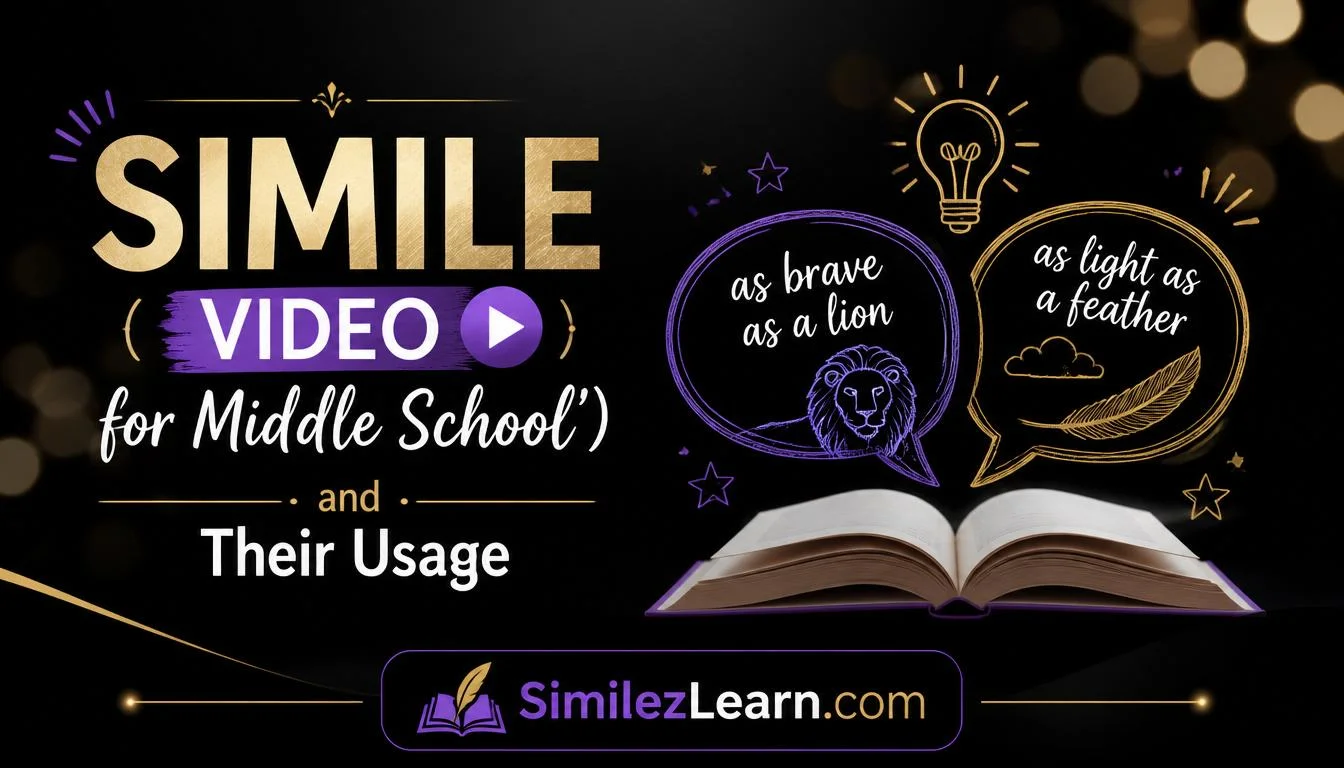
Learning similes becomes much easier when students can see and hear examples instead of just reading about them. A simile video for middle school helps learners understand figurative language through animations, classroom demonstrations, storytelling, and engaging visual examples. These videos make English lessons more enjoyable and help students remember the difference between literal and figurative language.
Whether you’re a middle school student, teacher, or parent, choosing the right simile video for middle school can improve reading, writing, and creative thinking. Updated for 2026, this guide explains what simile videos are, how they work, and recommends useful video ideas and learning resources to strengthen figurative language skills.
What Is a Simile Video for Middle School?
A simile video for middle school is an educational video designed to teach students how similes work. These videos explain that a simile compares two different things using the words like or as.
For example:
The runner was as fast as lightning.
A good simile video explains why this comparison makes writing stronger and shows students how to create their own examples.
These videos are commonly used in:
- Middle school English classes
- Online learning
- Homework assignments
- Homeschool lessons
- Reading workshops
- Writing activities
- Test preparation
How a Simile Video for Middle School Works
Most educational videos teach similes step by step.
A typical lesson includes:
- A simple definition
- Real-life examples
- Animated demonstrations
- Practice questions
- Writing activities
- A short quiz or review
From real-life writing experience, students remember figurative language much better when they both see and hear examples rather than reading definitions alone.
In everyday conversations, people often use simile video for middle school resources to help students prepare for English classes, homework, or creative writing assignments.
How Students Use Simile Videos in Everyday Learning
Teachers and students use these videos in many ways:
- Classroom lessons
- Homework review
- Independent study
- Group discussions
- Essay writing
- Poetry lessons
- Reading comprehension practice
- Creative storytelling
Watching a short video before completing writing activities often helps students recognize similes more quickly.
50 Helpful Simile Video Ideas and Learning Resources
1. Introduction to Similes
What students learn: Basic definition of a simile.
Why it’s useful: Perfect for beginners who are learning figurative language for the first time.
2. Similes Using “Like”
What students learn: How to compare using like.
Example: He ran like the wind.
3. Similes Using “As”
What students learn: How comparisons work with as.
Example: As brave as a lion.
4. Similes vs. Metaphors
What students learn: The difference between two common literary devices.
Why it’s useful: Prevents students from confusing the two concepts.
5. Animated Simile Examples
What students learn: Visual comparisons through cartoons and animations.
Why it’s useful: Keeps younger learners engaged.
6. Everyday Similes
What students learn: Similes used in daily conversation.
Example: As busy as a bee.
7. Similes in Children’s Stories
What students learn: How authors use similes in storytelling.
Why it’s useful: Improves reading comprehension.
8. Similes in Poetry
What students learn: Creative comparisons in poems.
Why it’s useful: Encourages imaginative writing.
9. Classroom Simile Practice
What students learn: Interactive classroom exercises.
Why it’s useful: Gives immediate practice after learning.
10. Sports Similes
What students learn: Similes related to games and athletics.
Example: Fast as lightning.
11. Animal Similes
What students learn: Popular comparisons using animals.
Example: Quiet as a mouse.
12. Nature Similes
What students learn: Comparisons inspired by nature.
Example: Bright as the sun.
13. Weather Similes
What students learn: Creative weather descriptions.
Example: Cold as ice.
14. Food Similes
What students learn: Fun comparisons using everyday foods.
Example: Sweet as honey.
15. Writing Your Own Similes
What students learn: Step-by-step writing practice.
Why it’s useful: Builds creativity.
16. Simile Quiz Videos
What students learn: Identify correct similes.
Why it’s useful: Reinforces learning.
17. Figurative Language Games
What students learn: Interactive learning activities.
Why it’s useful: Makes revision enjoyable.
18. Common Simile Mistakes
What students learn: Errors to avoid.
Why it’s useful: Improves grammar and writing accuracy.
19. Reading Passages with Similes
What students learn: Finding similes in context.
Why it’s useful: Strengthens reading skills.
20. Similes in Famous Books
What students learn: How published authors use comparisons.
Why it’s useful: Introduces students to literary writing.
21. Similes for Descriptive Writing
What students learn: Making essays more vivid.
Why it’s useful: Improves creative assignments.
22. Simile Challenge Activities
What students learn: Writing original comparisons.
Why it’s useful: Encourages independent thinking.
23. Simile Review Lessons
What students learn: Quick revision before exams.
Why it’s useful: Reinforces key concepts.
24. Figurative Language Practice Videos
What students learn: Similes alongside metaphors and personification.
Why it’s useful: Gives a complete understanding of figurative language.
25. End-of-Lesson Simile Quiz
What students learn: Review through interactive questions.
Why it’s useful: Helps students check their understanding before moving to more advanced topics.
26. Similes in Everyday Conversations
What students learn: How people naturally use similes in speech.
Example: As busy as a bee in daily life situations.
27. Funny Simile Videos for Engagement
What students learn: Humorous comparisons to make learning fun.
Why it’s useful: Keeps middle school students interested and focused.
28. Similes in Movies and Cartoons
What students learn: How media uses figurative language.
Example: Strong as a superhero in animated scenes.
29. Slow-Motion Simile Breakdowns
What students learn: Step-by-step explanation of each simile.
Why it’s useful: Helps struggling learners understand easily.
30. Real Classroom Teacher Lessons
What students learn: Live teaching examples of similes.
Why it’s useful: Feels like a real school experience.
31. Interactive Simile Worksheets Videos
What students learn: Practice while watching.
Why it’s useful: Improves retention through activity-based learning.
32. Story-Based Simile Lessons
What students learn: Similes inside short stories.
Example: As quiet as a mouse in a classroom story.
33. Similes for Emotions
What students learn: Expressing feelings using comparisons.
Example: Happy as sunshine.
34. Similes for Speed and Movement
What students learn: Action-based comparisons.
Example: Fast as lightning.
35. Visual Animation Simile Maps
What students learn: Graphic explanations of meaning.
Why it’s useful: Helps visual learners.
36. Pop Culture Similes
What students learn: Modern examples from games and media.
Example: Cool as a gaming pro.
37. Music-Based Simile Learning
What students learn: Similes in songs and lyrics.
Why it’s useful: Connects learning with rhythm and memory.
38. Step-by-Step Writing Tutorials
What students learn: How to create similes from scratch.
Why it’s useful: Builds writing confidence.
39. Similes in Nature Documentaries
What students learn: Descriptive language from real scenes.
Example: Calm as a still lake.
40. Quiz-Only Simile Practice Videos
What students learn: Test knowledge through MCQs.
Why it’s useful: Prepares students for exams.
41. Classroom Group Activities Video Guides
What students learn: Team-based simile creation.
Why it’s useful: Encourages collaboration.
42. Similes for School Life
What students learn: Daily school-related comparisons.
Example: As noisy as a playground.
43. Comparison Drill Videos
What students learn: Simile vs metaphor vs idiom drills.
Why it’s useful: Prevents confusion.
44. Visual Storytelling Simile Lessons
What students learn: Story scenes explained with similes.
Why it’s useful: Enhances imagination.
45. Memory Trick Simile Videos
What students learn: Easy ways to remember similes.
Why it’s useful: Improves long-term learning.
46. Exam Preparation Simile Reviews
What students learn: Quick revision before tests.
Why it’s useful: Strengthens exam confidence.
47. Student-Created Simile Videos
What students learn: Peer learning and creativity.
Why it’s useful: Builds confidence and participation.
48. Daily Life Observation Similes
What students learn: Finding similes in surroundings.
Example: As bright as street lights.
49. Creative Writing Workshop Videos
What students learn: Writing paragraphs using similes.
Why it’s useful: Improves essay writing skills.
50. Final Review & Mastery Videos
What students learn: Full recap of similes.
Why it’s useful: Strengthens complete understanding.
Simile Video vs Related Learning Methods
| Method | Purpose | Strength |
|---|---|---|
| Simile Video for Middle School | Visual + audio learning | Easy understanding |
| Worksheets | Written practice | Improves accuracy |
| Textbooks | Theory explanation | Strong foundation |
| Live Teaching | Real interaction | Instant feedback |
A simile video for middle school is often the most engaging because it combines visuals, storytelling, and examples.
How Teachers Can Choose or Create a Simile Video
1. Keep it simple
Use clear language suitable for middle school students.
2. Add real-life examples
Students understand better when examples are relatable.
3. Use visuals
Animations, pictures, and scenes improve memory.
4. Include practice questions
Let students try creating their own similes.
5. Keep it short
5–10 minute videos work best for attention span.
From real-life writing experience, students learn faster when lessons are interactive rather than text-heavy.
Common Mistakes Students Make
Confusing simile with metaphor
- ❌ The boy is a lion (metaphor)
- ✅ The boy is like a lion (simile)
Using unclear comparisons
Avoid random comparisons that don’t make sense.
Forgetting “like” or “as”
A simile must include these words.
Overusing similes
Too many comparisons can make writing confusing.
Frequently Asked Questions
What is a simile video for middle school?
It is an educational video that teaches students how similes work using visuals and examples.
Why are simile videos useful for students?
They make learning easier, more visual, and more engaging than textbooks alone.
Can teachers use simile videos in class?
Yes, they are commonly used for lessons, revision, and classroom activities.
What age group is this best for?
Mostly middle school students (grades 5–8), but beginners of any age can use them.
How do simile videos improve writing?
They help students understand comparisons and use them in essays and creative writing.
Conclusion
A simile video for middle school is one of the most effective ways to teach figurative language. It combines visuals, storytelling, and real-life examples to make learning simple and enjoyable.
These videos help students understand how to use like and as in creative writing, essays, and everyday communication. Updated for 2026, this guide shows that learning similes doesn’t have to be difficult—it can be fun, interactive, and highly engaging.
Students and teachers should regularly use these videos to strengthen English skills, improve creativity, and build confidence in writing.
DISCOVER MORE ARTICLES
Simile for Shadow: Writing Tips and Example List 2026
50 Best Simile for an Empty Classroom Examples Guide 2026
50 Simile for Kind Examples for Better English Skills 2026
