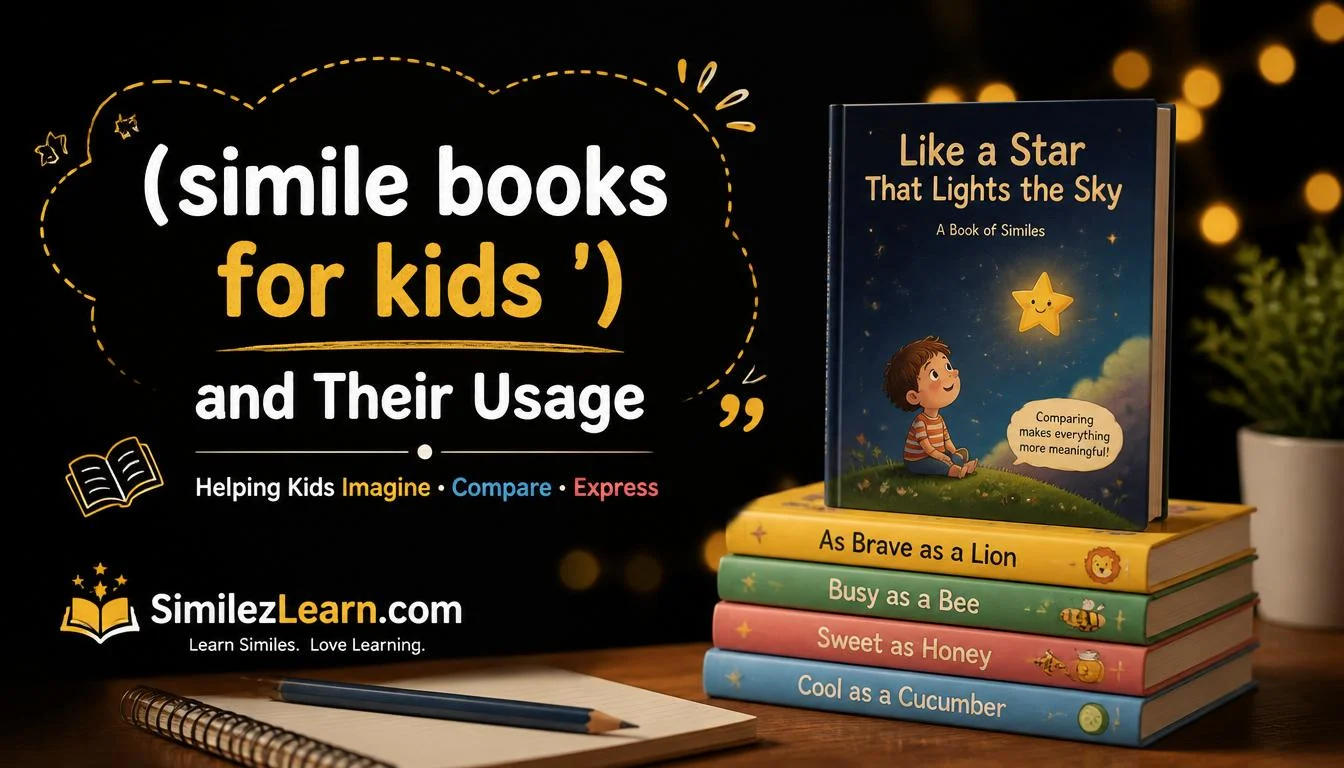
Teaching figurative language to children can sometimes feel challenging, but the right books make learning fun and memorable. That’s why simile books for kids are such valuable educational tools. They help young readers understand comparisons, expand vocabulary, and develop creative thinking through engaging stories and colorful illustrations.
A simile compares two things using the words “like” or “as.” When children encounter similes in books, they learn how authors create vivid mental images and make writing more expressive. For example, a sentence such as “The moon was as bright as a flashlight” instantly creates a picture in a child’s mind.
Whether you’re a parent, teacher, student, homeschool educator, or writer looking for resources, this guide explores simile books for kids, how they work, popular examples, and practical ways to use them. Updated for 2026, this article includes examples, activities, comparisons, and learning tips to help children master figurative language.
What Are Simile Books for Kids?
Simile books for kids are children’s books that teach, explain, or frequently use similes to help young readers understand figurative language.
Simple Definition
These books use comparisons with “like” and “as” to create vivid descriptions and strengthen reading comprehension.
Example
“She was as busy as a bee.”
A child can easily picture a hardworking bee, making the comparison simple to understand.
Why They Matter
Simile books help children:
- Improve vocabulary
- Build reading comprehension
- Develop creative writing skills
- Understand figurative language
- Enjoy reading more
How Simile Books for Kids Work
Simile books introduce comparisons in an easy and engaging way.
Basic Formula
Most similes follow this pattern:
Something + like/as + something else
Examples:
- As bright as the sun
- Like a fish in water
- As fast as a cheetah
Children learn by connecting familiar images with new ideas.
Why Visual Learning Helps
Many simile books include illustrations.
These pictures help children:
- Understand meanings faster
- Remember examples longer
- Build stronger language skills
Examples of Simile Books for Kids in Everyday Life
In Classrooms
Teachers often read simile books during language arts lessons.
Students learn how authors compare objects and emotions.
At Home
Parents can read simile books aloud and discuss the meanings.
This encourages vocabulary growth.
During Creative Writing
Children use similes they learn from books in stories and essays.
Reading Practice
Young readers gain confidence by recognizing figurative language.
In everyday conversations, people often use simile books for kids as educational tools that make language learning enjoyable.
40 Simile Examples Kids Commonly Find in Books
1. As Busy as a Bee
Meaning: Very active.
Example: Emma was as busy as a bee finishing her homework.
2. As Brave as a Lion
Meaning: Courageous.
Example: The firefighter was as brave as a lion.
3. As Quiet as a Mouse
Meaning: Very silent.
Example: The classroom became as quiet as a mouse.
4. As Bright as the Sun
Meaning: Extremely bright.
Example: Her smile was as bright as the sun.
5. As Fast as a Cheetah
Meaning: Very fast.
Example: He ran as fast as a cheetah.
6. As Light as a Feather
7. As Sweet as Honey
8. As Cool as Ice
9. As Tall as a Giraffe
10. As Soft as a Pillow
11. As White as Snow
12. As Green as Grass
13. As Loud as Thunder
14. As Smooth as Silk
15. As Round as a Ball
16. Like a Butterfly in Spring
17. Like a Rocket in the Sky
18. Like a Fish in Water
19. Like a Bird in Flight
20. Like a Star at Night
21. As Happy as a Clown
22. As Playful as a Puppy
23. As Clever as a Fox
24. As Strong as an Ox
25. As Gentle as a Lamb
26. As Tiny as an Ant
27. As Big as an Elephant
28. As Warm as Sunshine
29. As Colorful as a Rainbow
30. As Shiny as a Diamond
31. Like a Monkey on a Swing
32. Like a Kite in the Wind
33. Like a Dolphin in the Ocean
34. Like a Shooting Star
35. Like a Balloon Floating Away
36. As Quick as Lightning
37. As Calm as a Lake
38. As Sleepy as a Bear
39. As Busy as a School Hallway
40. As Happy as a Child at a Birthday Party
These examples help children understand how similes create vivid mental pictures.
Famous and Popular Simile Books for Kids
Many children’s books include memorable similes.
Popular types include:
Picture Books
Picture books combine illustrations with simple similes.
Poetry Books
Children’s poetry often contains creative comparisons.
Early Reader Books
Beginning readers learn figurative language through short stories.
Classroom Anthologies
These collections introduce multiple examples of similes and metaphors.
Teachers frequently use simile-focused books because they make abstract concepts easier to understand.
Simile Books for Kids vs Related Concepts
| Concept | Definition | Example |
|---|---|---|
| Simile | Comparison using like or as | As bright as the sun |
| Metaphor | Direct comparison | Her smile was sunshine |
| Idiom | Expression with figurative meaning | Piece of cake |
| Personification | Human traits given to objects | The wind danced |
| Hyperbole | Extreme exaggeration | I waited forever |
Key Difference
A simile always includes “like” or “as.”
This makes it easier for children to identify.
How to Use or Create Similes After Reading Books
Step 1: Pick a Quality
Think about:
- Fast
- Happy
- Bright
- Strong
- Quiet
Step 2: Find Something Similar
Examples:
- Lion
- Bee
- Sun
- Feather
- Mouse
Step 3: Build the Simile
Examples:
- As brave as a lion
- As quiet as a mouse
Step 4: Visualize the Image
Imagine the comparison.
If you can picture it clearly, the simile works.
From real-life writing experience, students remember similes more easily when they draw or discuss the images.
Fun Activities Using Simile Books for Kids
Simile Drawing Challenge
Students draw a simile they read.
Example:
As busy as a bee
Draw a bee working around flowers.
Simile Matching Game
Match:
- Brave → Lion
- Fast → Cheetah
- Quiet → Mouse
Create Your Own Simile
Children invent original comparisons.
Example:
“As excited as a gamer getting a new game.”
Simile Scavenger Hunt
Search books for similes and record them.
Common Mistakes People Make With Simile Books for Kids
Confusing Similes With Metaphors
Simile:
As brave as a lion
Metaphor:
He was a lion
Forgetting Like or As
Incorrect:
She was sunshine.
Correct:
She was as bright as sunshine.
Choosing Difficult Comparisons
Use familiar images children can understand.
Memorizing Without Understanding
Children should learn the meaning behind the comparison.
Practical Uses of Simile Books for Kids
Essays
Make descriptions stronger.
Stories
Create vivid characters and settings.
Poems
Add imagery and emotion.
Presentations
Help students express ideas creatively.
Social Media and Captions
Older children may enjoy using simple similes online.
Examples:
- “Happy as a puppy today!”
- “Fast as lightning on the soccer field!”
Related Topics to Explore
Consider linking to:
- Simile examples for students
- Metaphor examples for kids
- Figurative language worksheets
- Personification activities
- Hyperbole examples
- Creative writing prompts
- Simile images for kids
- Simile activities for classrooms
Frequently Asked Questions
What are simile books for kids?
They are books that teach or use similes to help children understand figurative language through examples and stories.
Why are simile books important?
They improve reading comprehension, vocabulary, creativity, and writing skills.
At what age can children learn similes?
Most children can begin learning simple similes between ages 6 and 8, though younger children may enjoy them too.
Are simile books useful for writing?
Yes. They help children create stronger essays, stories, and poems.
How can parents use simile books at home?
Parents can read aloud, discuss meanings, and encourage children to create their own similes.
Conclusion
Simile books for kids are powerful resources for teaching figurative language in a fun and engaging way. By combining imaginative comparisons with memorable stories and illustrations, these books help children understand how language can create vivid mental images.
Whether used in classrooms, homeschool settings, libraries, or at home, simile books encourage creativity, strengthen reading comprehension, and improve writing skills. They transform learning into an enjoyable experience.
As children continue exploring language in 2026 and beyond, encourage them to read, recognize, and create their own similes. The more they practice, the more confident and expressive they will become as readers and writers.
DISCOVER MORE ARTICLES
Simile for Time Going Fast: 45 Creative Example Ideas 2026
Simile for Crowded Place: Best Comparisons for Writing 2026
Simile Images for Kids: Easy Learning Guide for 2026
